Reflections on the Seminar:
I. From the Perspective of Disciplinary Integration (Inter/Trans/Integrated Disciplinary Research)
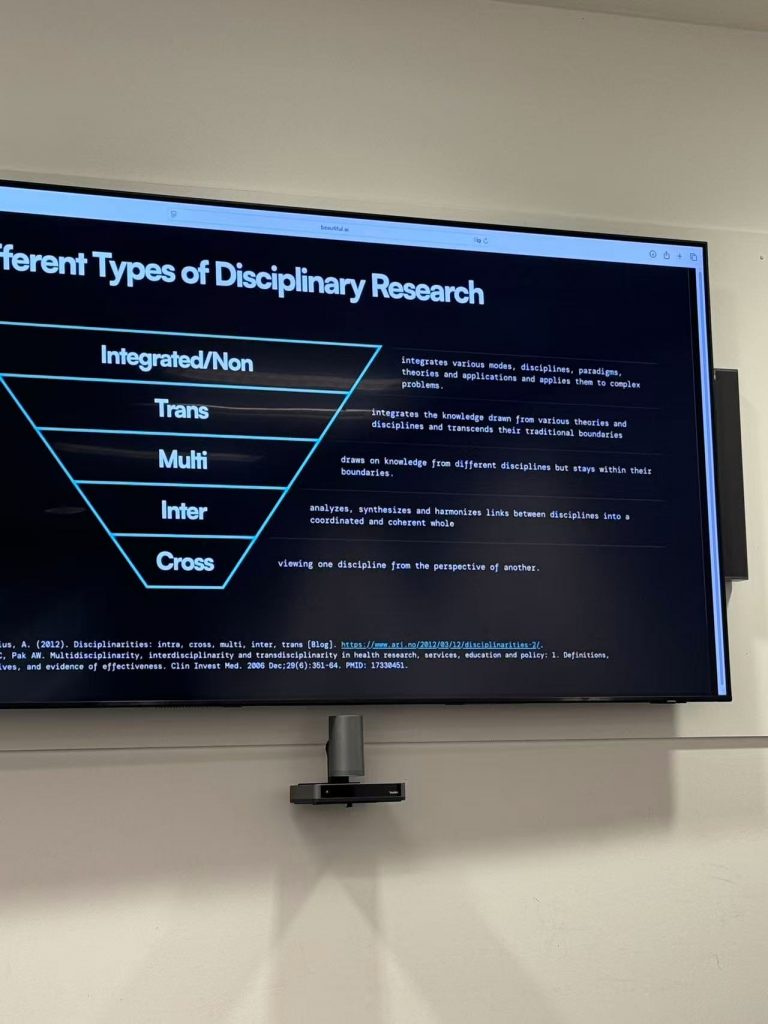
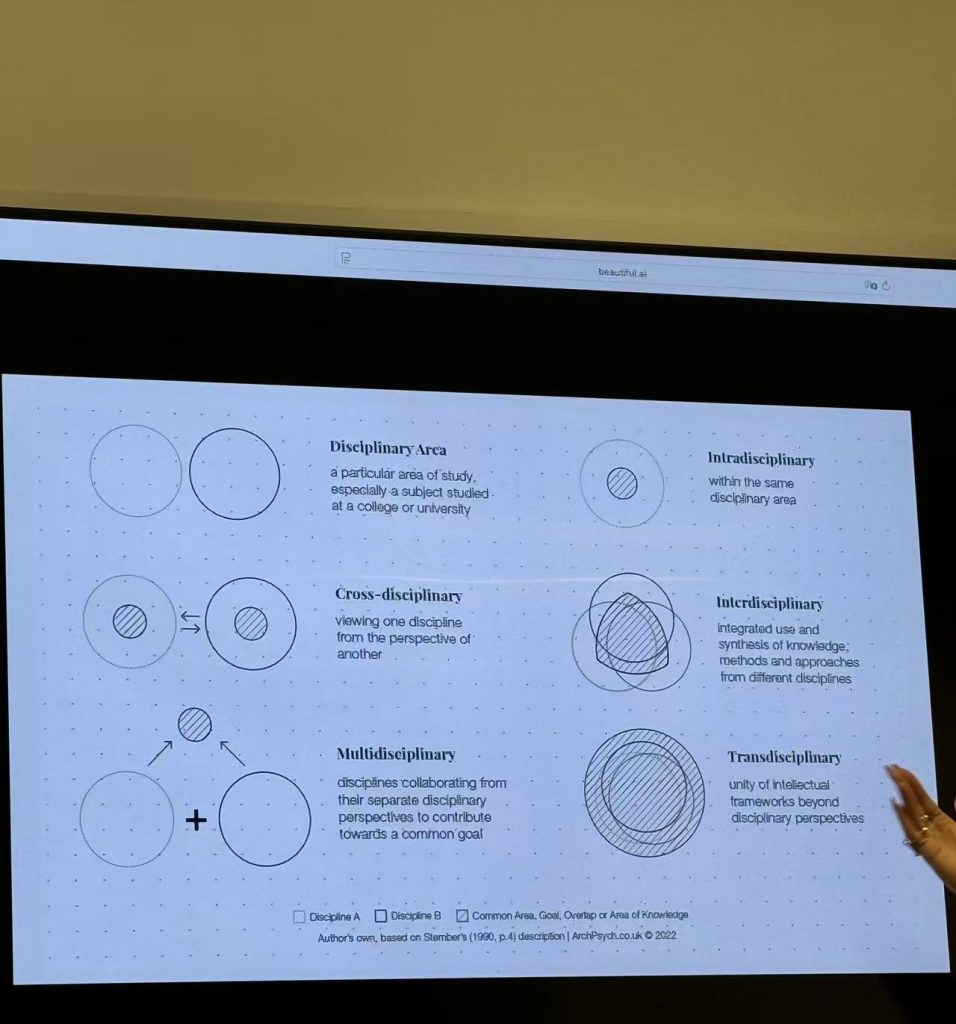
My research essentially falls between Cross-disciplinary and Transdisciplinary models.
1. Cross-disciplinary
My research draws from psychology (Self-Determination Theory, Behavioral Substitution) and sociology (youth time anxiety, social rhythm) to explore the relationship between sleep and social structure. It combines design thinking with intervention experiments, transforming theoretical understanding into practical application.
2. Interdisciplinary
In my experiments, I integrate approaches from behavioral science, psychology, and design research (such as the Daily Rhythm Perception Card, Sleep Transfer Intervention, and Self-Control Schedule). Rather than focusing solely on the physiological aspects of sleep, the study investigates the cognitive mechanisms of psychological compensation and perceived time control, reflecting knowledge integration and transformation.
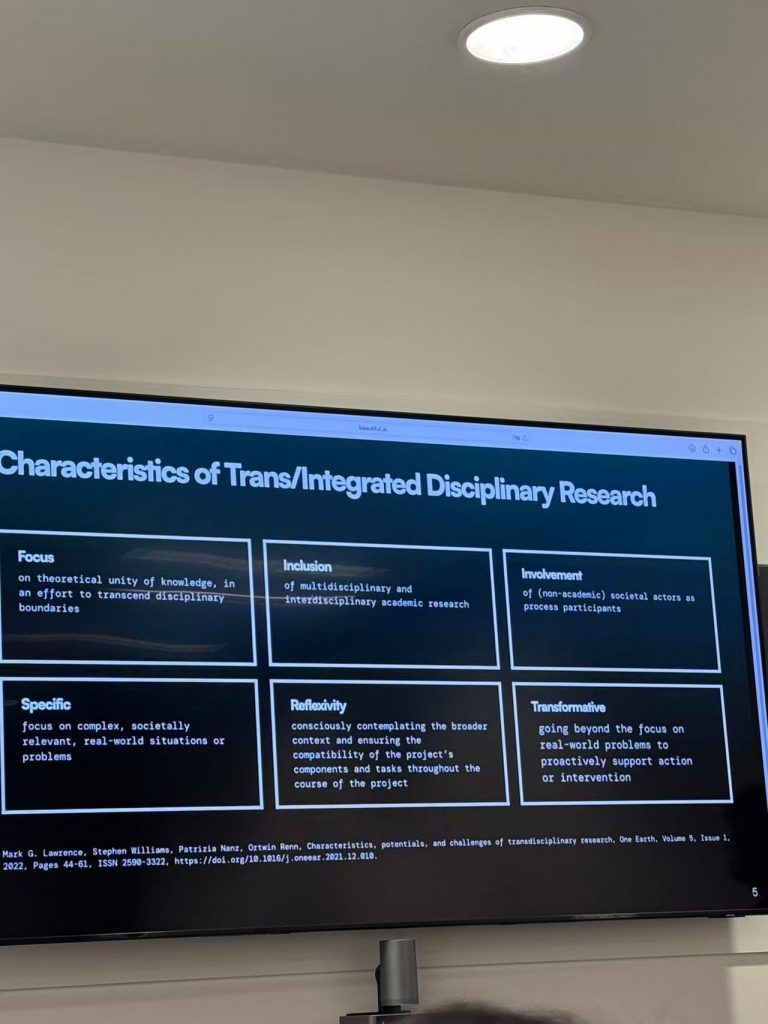
3. Transdisciplinary
The research addresses a social issue — the psychological imbalance faced by young people under work and life pressure. Through intervention-based research, I propose socially applicable strategies (e.g., enhancing daytime autonomy and rhythm awareness), embodying the characteristics of action research.
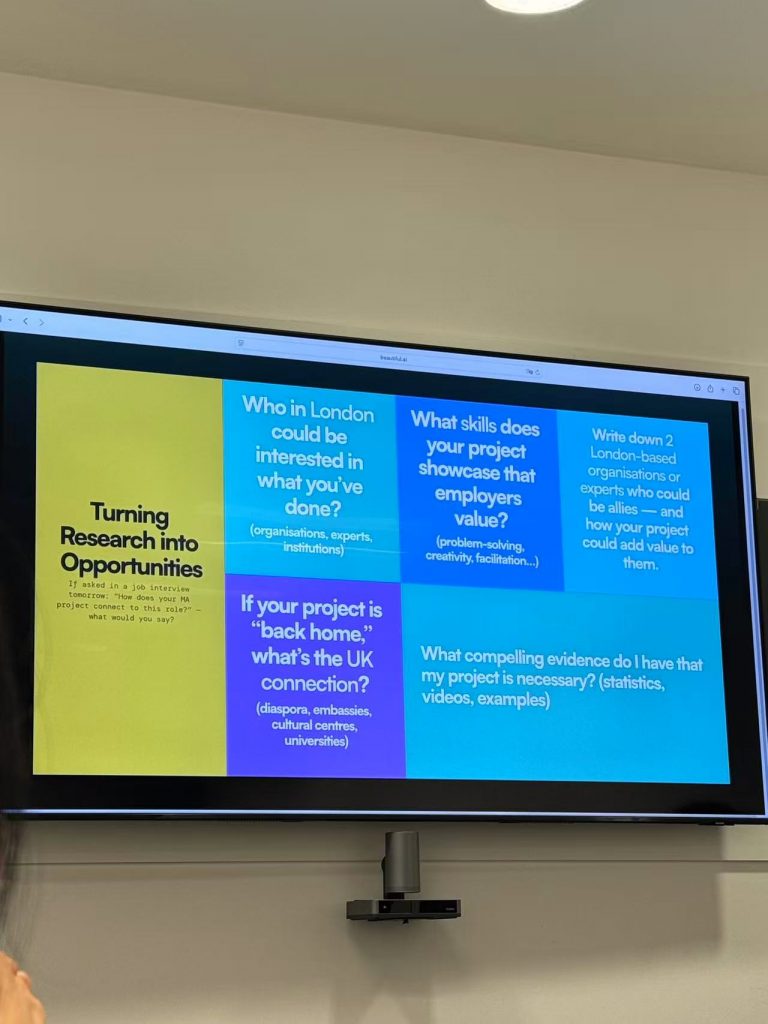
II. Turning Research into Opportunities
1. Career Connection
My research aligns closely with the fields of Event Design and Wellness Programming.
I can translate my findings into wellbeing workshops and rhythm-awareness activities that help organizations and universities improve time management and mental wellbeing among employees or students.In future career development, I could apply this expertise as a Wellbeing Experience Designer or Behavioral Intervention Planner.
2. Skill Value
Analytical ability: Transforming complex psychosocial phenomena into structured research.
Creative planning ability: Developing design-based solutions through behavioral interventions.
Interdisciplinary communication and collaboration: Integrating methods from psychology, sociology, and design research.
SWOT Analysis
Strengths
1.High Innovativeness
The research focuses on the psychological motivations behind Revenge Bedtime Procrastination—specifically autonomy deficit and psychological compensation—breaking through the traditional limitations of sleep studies that mainly emphasize behavioral and physiological aspects.
By integrating psychological theories (Self-Determination Theory, Sense of Time Control, and Substitutive Satisfaction Theory) with design research methods (intervention experiments and rhythm perception cards), the study establishes a unique interdisciplinary approach.
2.Multi-level Intervention Design
The three experiments (Sleep Shift → Rhythm Perception → Self-Control) form a progressive structure that combines practical applicability with theoretical depth.
3.High Relevance to Social Issues
The research provides an intervention model addressing common psychological problems among young people, such as time anxiety and self-imbalance.
It carries potential social influence and can be extended to areas such as health education and event planning.
Weaknesses
1.Limited Sample Size
The small number of participants makes it difficult to produce statistically significant conclusions.
The data leans more toward qualitative description, lacking sufficient quantitative validation.
2.Short Research Duration
The intervention periods were relatively brief (most experiments lasted only a few days), making it difficult to reflect long-term behavioral changes.
3.Risk of Subjective Bias
The data collection relied heavily on participants’ self-reports, which may introduce subjective bias.
Opportunities
1.Potential for Interdisciplinary Expansion
The study can be further developed through collaborations with psychology, sociology, and health communication disciplines.
2.High Potential for Social Application
The findings can be transformed into well-being experiences or sustainable health programs.
Combined with my professional focus on Event/Experience Design, it can evolve into a Research-led Event Design model.
3.Media and Public Communication Potential
The topic resonates with key pain points in modern young people’s lives and could be further disseminated and used for education through exhibitions, installations, or interactive experiences.
Threats
1.Complexity of Behavioral Change
Revenge bedtime procrastination is influenced by external factors such as social structures and work systems, making it difficult to address through individual interventions alone.
2.Challenges in Theoretical Application
Translating abstract psychological theories into practical interventions requires continuous adjustment and refinement.
3.Public Misconceptions
Society often attributes staying up late to “personal habits,” neglecting its deeper social and psychological roots—posing challenges for research communication and public understanding.
Leave a Reply