Blog:
·Introduction: explains why I chose revenge bedtime procrastination, my research question, and personal motivation.
·Timeline Section: a visual and tabular timeline of how bedtime procrastination develops (start – peak – decline).
·Main Content Structure:
What people usually do during revenge bedtime procrastination
What my interventions attempted to change
What suggestions or solutions I propose
·Reflection & Engagement: personal learning, participant feedback, challenges, and how the process reshaped my understanding.
·The blog link will be included in the report, and the report will highlight key insights from the blog.
Report:
·Include a link to the blog and only highlight the key findings in the report.
·Simplify the methodology section but keep a clear structure.
·Maintain consistency across the three intervention descriptions and show their connections (how feedback from the first informed the second).
·Add evidence linking digital devices/phone addiction with bedtime procrastination.
·Number all pages and cite authoritative sources.
Intervention:
·What people do: stay up watching videos, scrolling social media, chatting, gaming, using phones to reclaim “personal time”.
·What my intervention does: shifts this compensatory personal time to daytime through timeline substitution, rhythm-tracking cards, and self-scheduled routines.
·What I suggest: create intentional daytime autonomy, instead of relying on late-night emotional compensation.
·Key issue I focus on: not just phone addiction, but the lack of control, emotional release, and psychological ownership of time.
Presentation:
·Use more visuals than text—avoid reading slides.
·Follow the What → Why → How → What if structure.
·Use presenter notes to speak naturally.
·End with “What if” – What does it mean, where can it go, what can I do next?
What People Typically Do During Revenge Bedtime Procrastination:
According to the Sleep Foundation, Revenge Bedtime Procrastination refers to intentionally staying up late,even when one knows it will negatively affect the next day in order to engage in personal activities such as watching TV shows, gaming, scrolling through social media, or chatting online.
Research shows that once in bed, many individuals still delay sleep by watching YouTube videos or movies, listening to music, texting, or using their phones.
These findings indicate that revenge bedtime procrastination is largely associated with entertainment, socializing, and the pursuit of personal or compensatory “me time.”
What My Intervention Does:
The interventions I designed such as the Time Substitution Experiment, Daytime Rhythm Awareness Cards, and Self-Control Scheduling,aim to shift compensatory autonomous time from nighttime to daytime. The goal is to help participants experience autonomy, satisfaction and control during the day, thereby reducing the need to stay up late.
These interventions work through:
Tracking & Reflection: Helping participants recognize their nighttime compensatory behavior patterns.
Substitution Activities: Assigning daytime activities that feel like “this time belongs to me.”
Autonomy Planning: Enhancing daytime agency and control, thus lowering the emotional urge to reclaim time at night.
What I Propose:
I propose encouraging individuals to build “autonomous personal time” during the day, rather than relying on late night hours as their only source of freedom. This includes:
Replacing passive late-night scrolling, gaming, or socializing with conscious, meaningful daytime activities.
Planning daytime moments that feel personally owned and self-directed.
Using tools such as schedule cards or reflection logs to monitor feelings of control, satisfaction, and fatigue, helping individuals understand and adjust their behavior patterns.
10.29 seminar
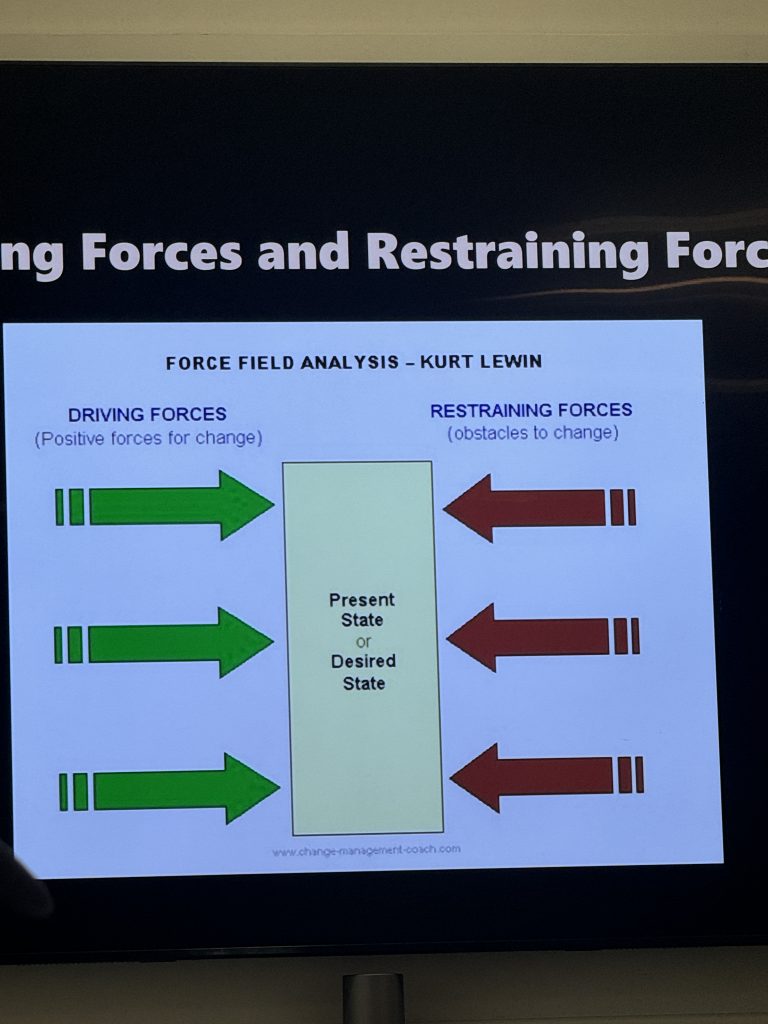
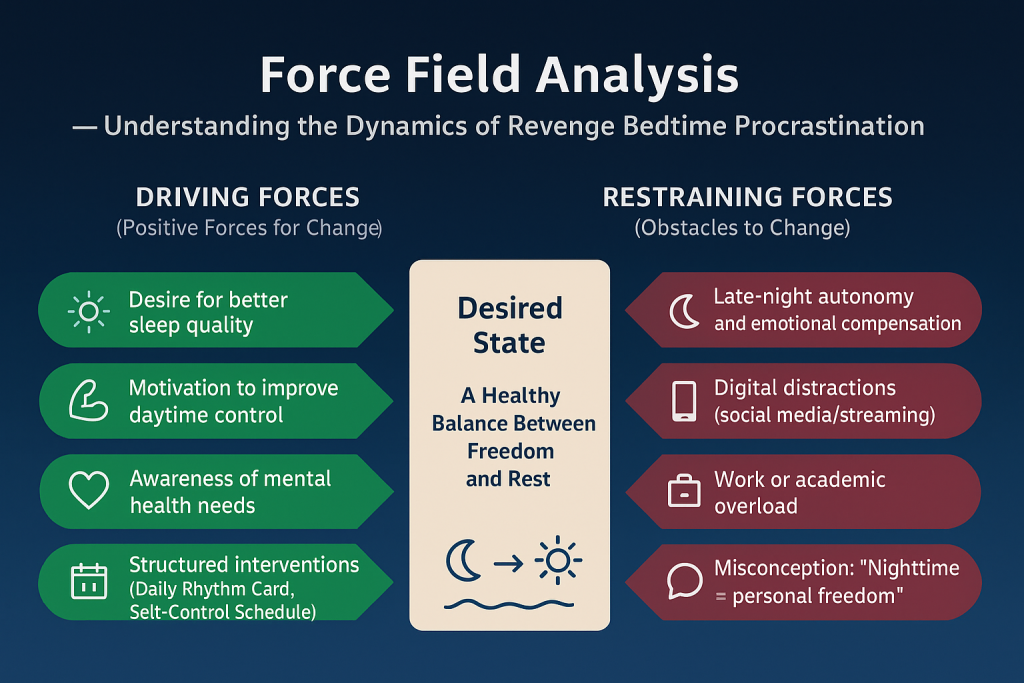
This analysis visualizes the psychological and behavioral forces influencing Revenge Bedtime Procrastination. On one side, participants are driven by the desire for mental restoration, control, and healthy rhythms. On the other, emotional dependence on nighttime freedom, social distractions, and work pressure act as restraining forces. The interventions I designed — Sleep Transfer, Daily Rhythm Card, and Self-Control Schedule — aim to strengthen driving forces and weaken restraining ones, helping individuals reclaim autonomy during the day rather than at night.
This Force Field Analysis can be well explained:
·What does my research demonstrate
·What forces have I discovered driving or hindering Revenge Bedtime Procrastination?
·Why is the intervention effective or ineffective
Leave a Reply